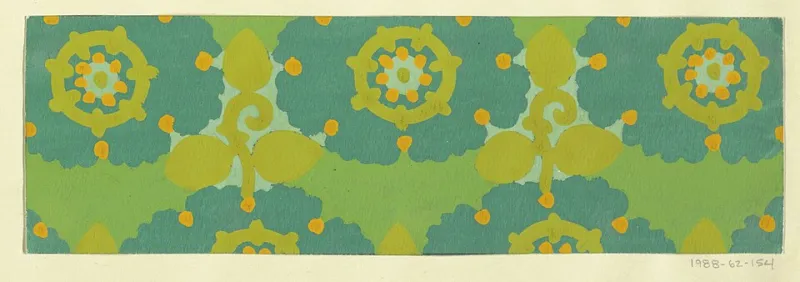
Spin Cycle Reviews: What a Month of Laundromat Hanging Taught Me About My Portfolio
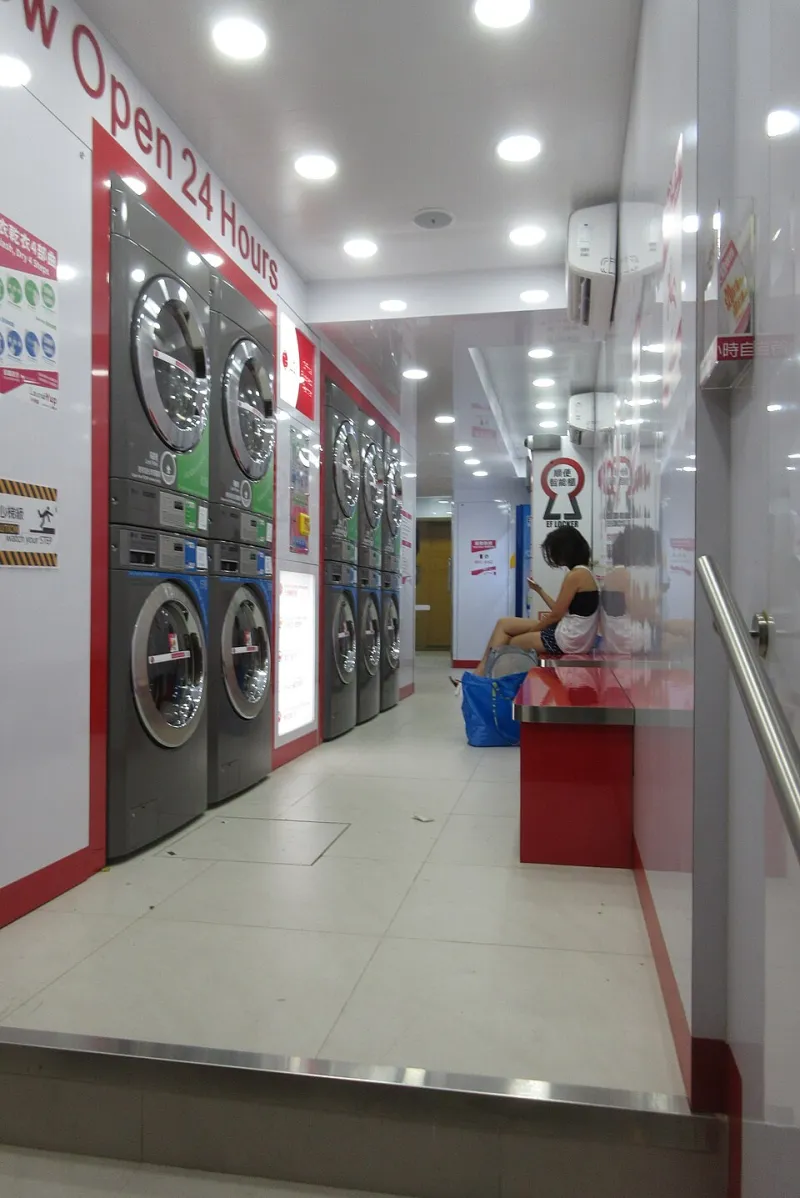
Photo: CHKHVIW23, CC BY-SA 4.0, via Wikimedia Commons
I spent October 2026 running what I've been calling a laundromat vernissage, minus the vernissage. No wine, no small talk, no friend-of-a-friend asking what my process is while I hold a paper cup. Just five framed prints on a wall near the folding tables, a rotation every Sunday, and the steady percussion of quarters dropping into machines.
The idea started as a joke. A gallery had asked me for an artist statement, and I was staring at a blank page wondering who actually needed it. The laundromat down the street had a long empty wall, a friendly owner, and absolutely no interest in my statement. So I asked if I could hang some work. He said yes before I finished the sentence.
The Setup: Five Frames, Zero Fanfare
The terms were simple. I'd supply the frames, hang the prints with damage-resistant hardware, and swap them weekly. No signage calling it art. No QR code to my website. No price list taped to the wall. The only thing I added was a small card in the corner with my name and a single sentence: 'Prints available — ask the attendant.'
I wanted to know what the work did when nobody was there to be polite about it. Galleries give you context. Friends give you encouragement. A coin laundry gives you fluorescent light, humidity, and a guy named Marcus who is mostly focused on the change machine.
Week One: Invisible
For the first seven days, the prints might as well have been paint samples. People walked past them to reach the dryers. Someone hung a damp hoodie on the corner of one frame. A kid pointed at the blue print and said, 'That one looks like a swimming pool,' which was not wrong.
I checked in twice a day like a nervous parent. The work was fine. The audience was not there, and that turned out to be useful information. A gallery opening guarantees a room. A living room guarantees a reaction. A laundromat guarantees neither, which means every glance is voluntary.
The Feedback That Actually Arrived
The comments were small and strange and better than most critiques I've gotten. A woman folding sheets asked if the yellow print was 'the one from the bus stop,' which it was not. A man in a construction vest stared at the largest piece for a full minute and then said, 'I don't get it, but I like the colors.' Someone wrote 'nice' on a receipt and left it on the folding table, which I choose to count as a review.
My favorite interaction happened in week three. A teenager taking photos of her laundry pile accidentally included one of my prints in the background. She looked at the frame, then at her phone, then back at the frame. She didn't say anything. She just adjusted her angle so the print was more visible. I have decided that is the highest compliment available in the building.
Smudges, Condensation, and Other Reviews
The work did not stay pristine. One print picked up a faint ring from a detergent bottle set down too close. Another developed a slight wave in the paper from the humidity. A frame corner got chipped, probably by a basket.
At first I was annoyed. Then I realized this was the most honest durability test my work had ever been through. Gallery prints live in climate-controlled rooms and get handled with white gloves. These prints lived among dryer lint and stray socks. They survived. That matters if you ever want your work to exist outside a white cube.
The Indifference Was the Point
Most people ignored the wall completely. I want to be clear about that, because it's the part I keep thinking about. They were not hostile. They were busy. They had a specific task — get the grass stain out of a soccer jersey — and my prints were not part of that task.
Indifference is not the same as rejection. It's just a reminder that public space is full of people with better things to do. A portfolio that only works when someone is already interested is a fragile portfolio. The laundromat asked my work to earn a glance from someone holding a laundry basket, and sometimes it did.
Living Rooms Lie a Little
I've done the friendly living room test before. You hang work for people who like you, and they say supportive things while holding a glass of something. It's lovely. It's also a controlled environment. Nobody in my living room has ever set a detergent bottle on my frame.
The laundromat had no social contract with me. People didn't know I was watching, and they didn't owe me a reaction. That made the positive moments feel weirder and more real. When someone asked the attendant if the blue one was for sale, I felt a small jolt of proof. Not because a sale is proof of quality, but because a stranger had chosen to spend money on something they saw while waiting for a spin cycle.
Galleries Do the Talking for You
A gallery tells people what to think before they see the work. The lighting says 'important.' The wall text says 'context.' The opening says 'stay for twenty minutes and pretend to enjoy the crackers.' All of that is useful, and none of it is neutral.
The laundromat had no such script. My prints were just objects on a wall next to a missing-person flyer and a laminated rule about not washing rugs. If the work couldn't hold attention in that environment, I needed to know. Some of it couldn't. Some of it could. That's a clearer answer than I usually get.
What I'm Keeping, What I'm Changing
I'm not abandoning galleries, and I'm definitely not abandoning my friends' living rooms. But I am keeping a rotating public slot somewhere in my life. The laundromat wall worked because it was low-stakes, high-traffic, and completely indifferent to my feelings.
I'm also simplifying my captions. The one sentence on the card did more work than any artist statement I've written. I'm rethinking my framing for humid spaces. And I'm keeping a small stack of prints that are allowed to get smudged, because a print that can survive a laundromat can survive almost anything.
The Honest Wall
A laundromat is not a gallery. It's not a career move, and it won't impress anyone at a dinner party. But for one month, it was the most honest portfolio review I've had in years. No one was there to be nice. No one was there at all, most of the time. The work just hung there among the dryers, collecting whatever attention it could.
If you want to know what your work does when nobody is looking, find a wall where nobody has a reason to look. Then pay attention to who does.